Breath of Fire is foundational in Kundalini Yoga. It is a signature breath technique (pranayama) and a common component in kriyas due to its profound energetic effects. It heals, strengthens the nerves, and clears out old patterns and toxins. It takes time to master the breath balance and coordination, but the benefits make it worthwhile.
Remember to tune in with the Adi Mantra (“Ong Namo Guru Dev Namo”) before all Kundalini Yoga practice, and end with the “Long Time Sun Shine” song.
What it is and How it’s Done
Breath of Fire, also called agni praan, is a rapid, rhythmic, continuous breath pattern generated from the navel point and diaphragm. It is equal on the inhale and the exhale, with no pause between them. The pace is approximately 2-3 breath cycles per second.
Breath of Fire is not hyperventilation, nor is it Bellows Breath. It is always practiced through the nostrils with the mouth closed, unless stated otherwise. It is powered from the navel point and the solar plexus. On the exhale, the air is expelled powerfully through the nose by pressing the navel point and solar plexus back toward the spine. This feels automatic if you contract the diaphragm rapidly.
On the inhale, the upper abdominal muscles relax, the diaphragm extends down, and the breath seems to come in as part of relaxation rather than through effort. The chest stays relaxed and slightly lifted throughout the breath cycle. When done correctly, the hands, feet, face, and shoulders stay relaxed. It can be practiced on its own for anywhere from 1 to 31 minutes.
Sometimes, beginners experience tingling or lightheadedness when first learning Breath of Fire. This is completely normal as your body adjusts to the new breath and new stimulation of the nerves. Concentrating at the Brow Point may help. Sometimes these sensations are the result of toxins and other chemicals released by the breath technique.
The Effects and Benefits of Breath of Fire
- Releases toxins and deposits from the lungs, mucous linings, and blood vessels.
- Cleanses the blood.
- Strengthens the nervous system to resist stress.
- Expands the lung capacity and frees the natural flow of energy through the body.
- Improves digestion.
- Repairs the balance between the sympathetic and parasympathetic nervous systems.
- Increases physical endurance.
- Strengthens the navel chakra.
- Expands the subtle psycho-electromagnetic field of the aura.
- Helps to break addictive impulses.
- Increases oxygen delivery to the brain, facilitating a focused, intelligent, and neutral state of mind.
- Boosts the immune system.
Common Mistakes in Breath of Fire
- Paradoxical Breathing: Many people learn to breathe backwards: they inhale by pulling the belly in, thus making the space for the breath smaller rather than larger. This is called paradoxical breathing. It can be easily changed by placing a hand on the chest and one on the belly and doing Breath of Fire slowly with total awareness.
- Forcing the Inhale: In Breath of Fire, only the exhale is active. Let the inhale happen naturally.
- Unequal Exhales and Inhales: One way to get this right is to do it wrong first. Try to inhale much more than you exhale with each breath cycle at 1 – 2 times per second. Within 30 seconds, you can sense the over-stimulated jumpiness and imbalance of the breath. Then switch to a much greater exhale than an inhale at the same pace. Almost immediately, you will sense a loss of strength, lethargy, distraction, or depression. Now make the breath exactly equal on the inhale and exhale. Listen to the sound of breath and create a steady rhythm.
- Trying to Breathe too Fast: Breathe at a smooth, steady, even pace.
- Tensing the Face, Neck, or Shoulders: This blocks the energy.
- Ignoring Discomfort: Relax the breath if you experience lightheadedness, dizziness, or nausea. Begin breathing slowly. Resume Breath of Fire when you feel steady.
Contraindications
Refrain from practicing Breath of Fire
- During pregnancy
- During the first or second days of your menstruation, depending on the intensity of the flow
- If experiencing dizziness, panic, or uncontrolled high blood pressure
- When recovering from surgery or serious illness
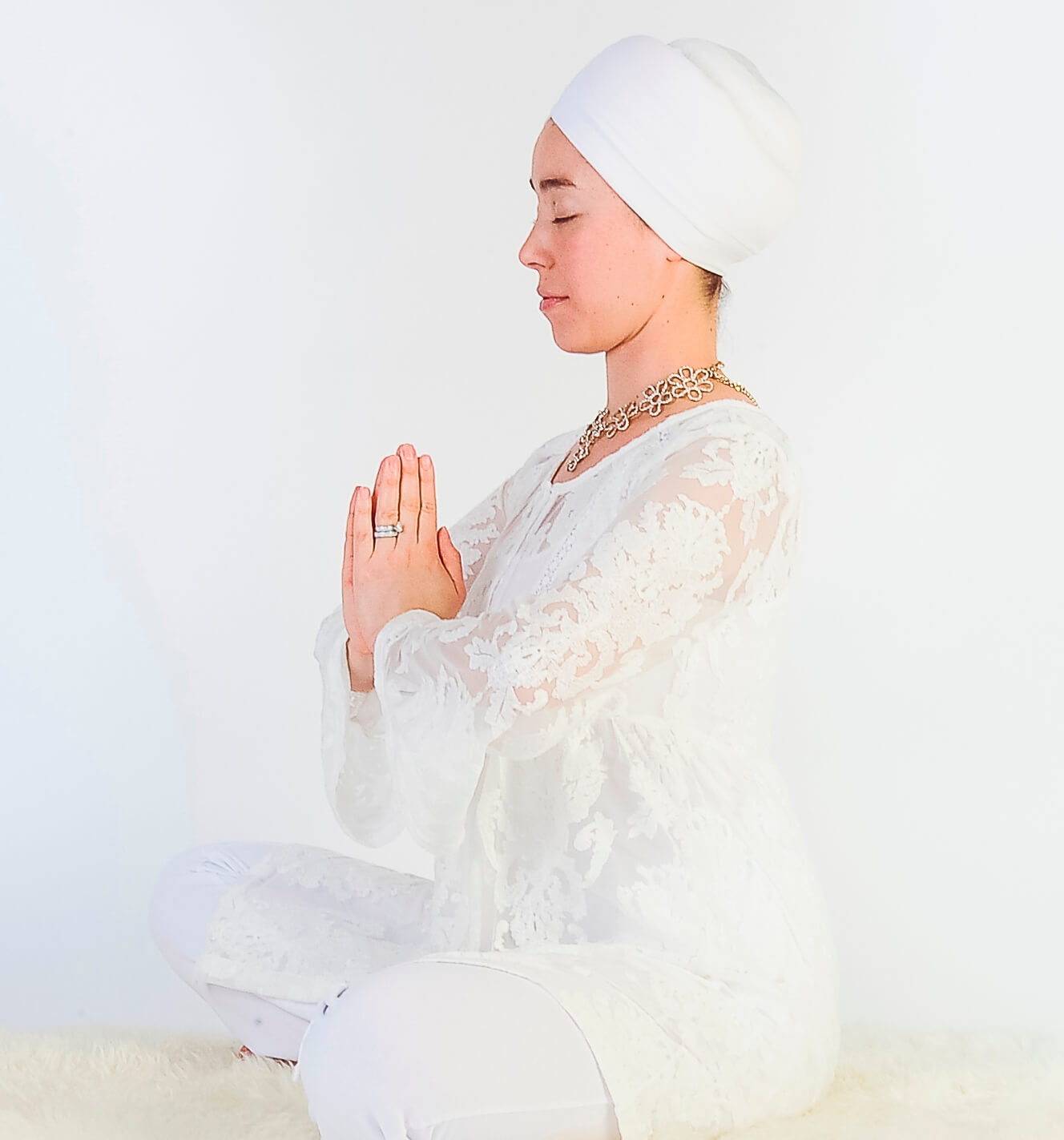
Before you begin your practice, tune-in by chanting the mantra Ong Namo Guru Dev Namo
How to chant the mantra Ong Namo Guru Dev Namo
Sit in Easy Pose with your spine straight. Press your palms together in Prayer Pose at the center of the chest, sides of the thumbs pressed against the sternum. With your eyes closed, focus your concentration at the Third Eye Point located between the eyebrows at the root of the nose, about a half inch under the skin. Inhale deeply and as you exhale chant Ong Namo Guru Dev Namo, on one breath. The sound Dev is chanted a minor third higher than the other sounds. If you cannot chant it all on one breath, take a short breath after Ong Namo. Repeat the mantra three times. The meaning of Ong Namo Guru Dev Namo is: I call on the creative infinite consciousness of the universe. I call on the divine wisdom within me.
Access the complete practice
To view full instructions, images, and additional details for this practice, please log in or join our community.
✨ See Premium Member Benefits
- Full access to all practice instructions
- Exercise timers
- Practice notes & testimonials
- Solstice discounts and course offers
- Exclusive PDFs & mantra music (coming soon)