What is Pranayam ?
Prana means life force. Ayam means expansion and direction. Together, Pranayam is more than “deep breathing.” It is the intentional shaping of energy through breath. The yogic breathing is about rhythm and depth that becomes your steering wheel. The mind follows that wheel, and the body follows the mind. Therefore, breathwork turns into a direct path to focus, resilience, and grace.
Moreover, Pranayam in this lineage is practical. It begins with natural breathing. Then it adds patterns, ratios, and gentle pauses. Each element has a purpose, and each can be learned with care.
Estimated reading time: 6 minutes
Table of contents
- What is Pranayam ?
- Breath Signatures: Why Most of Us Breathe Small
- The Foundation: Long Deep Breathing
- Breath Suspensions: Stillness Without Strain
- Akal Pranayam – One-Minute Breath: The Quiet Reset
- Breath of Fire – Agni Pranayam: Bright Energy, Steady Nerves
- Nadi Sodhan Pranayam – Alternate Nostril Breathing: Balance on Demand
- Cooling and Specialty Breaths: Precise Tools
- The Science in Everyday Words
- Safety and Good Sense
- FAQ´S
- Takeaway
Breath Signatures: Why Most of Us Breathe Small
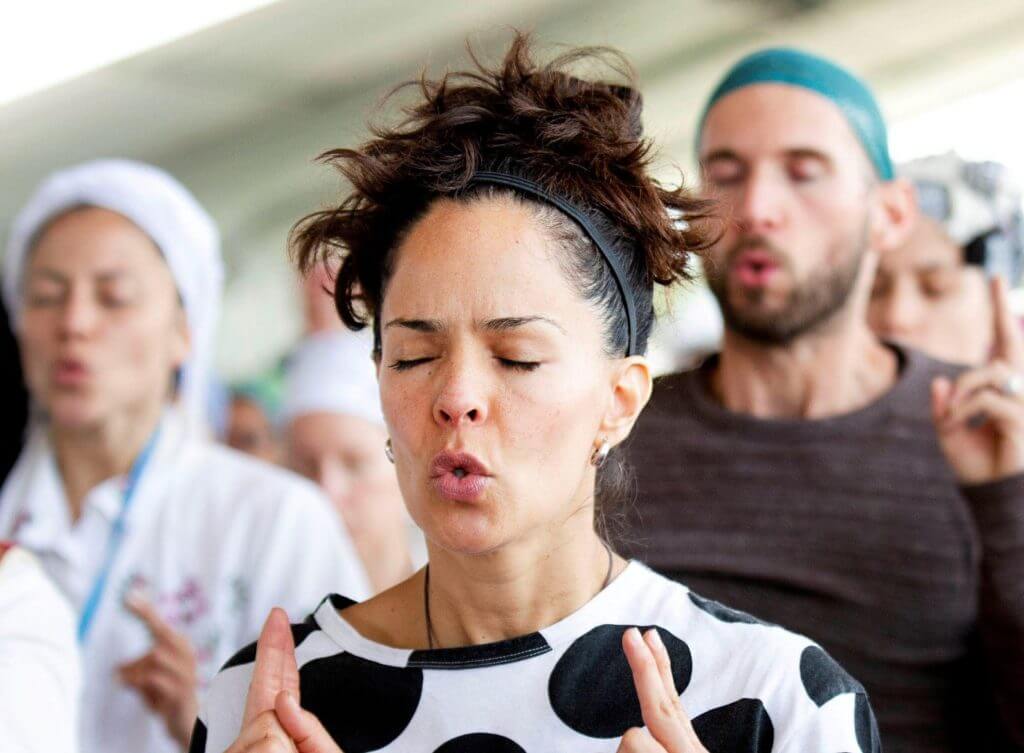
Modern stress shortens and shallows the breath. Many people live in the upper chest and never fully exhale. Over time, the nervous system stays edgy, the ribs tighten, and sensitivity dulls. As you retrain your pattern, armor softens. Lung capacity grows, prana moves again, and vitality returns. That is pranayam, using your breath as a conscious tool.
There is also a simple equation. Most men breathe 16–18 times per minute; most women, 18–20. When you slow that rate, your state changes. Around eight breaths per minute, relaxation deepens. At four, clarity rises and a meditative tone appears. At one breath per minute—the balanced 20–20–20—the whole brain coordinates and intuition feels near. These are trainable reflexes, not magic.
The Foundation: Long Deep Breathing
It is always preferable to learn all these techniques in person with a Certified Kundalini Yoga Teacher, so you can understand and experience in depth and with guidance all these different pranayam.
Start here. Imagine a smooth three-part wave. First, the belly expands. Next, the ribs widen. Finally, the upper chest lifts. Exhale in reverse: upper, middle, lower. Practice each part alone, then blend them into one seamless cycle. Keep the spine tall and breathe through the nose.
Why it matters: Long Deep Breathing calms the parasympathetic system, clears stale air, and improves gas exchange. In addition, it can lift mood, brighten focus, and reset pH. Over time, it supports emotional healing and patient clarity.
Try it now: Sit tall. Place one hand on the navel and one on the chest. Inhale belly, ribs, chest. Exhale chest, ribs, belly. Continue for three to seven minutes. Then sit in silence for one minute and notice what changed.
Learn how to practice Long Deep Breathing here
Breath Suspensions: Stillness Without Strain
We do not clamp the breath; we suspend it. On the inhale, lift the ribs slightly, relax the throat, and become still. On the exhale, empty fully, draw the navel back, and keep the chest soft. If reflexes kick in, exhale a bit more and remain calm. This extends the pause without struggle.
Why suspend at all? Suspension reconditions the nervous system. Inhale suspensions can briefly raise pressure and organize the system. Exhale suspensions tend to lower pressure and relax circulation. In that quiet, many experience Shuniya—a fertile zero where new habits grow.
Practical notes: Prepare with a few complete exhales. Rising CO₂ is the cue to breathe, not falling oxygen. If you release a bit of CO₂ first, the pause feels easier. Stop if you feel dizzy. Dizziness is feedback, not progress. Build this skill patiently.
Akal Pranayam – One-Minute Breath: The Quiet Reset
This classic pacing uses a 20-second inhale, 20-second hold, and 20-second exhale. Work toward it gradually with 10-10-10, then 15-15-15. The effect is profound. Hemispheres coordinate, anxiety softens, and presence steadies. Many students report a clear awareness that lingers after practice.
Learn how to do the One Minute Breath here
Breath of Fire – Agni Pranayam: Bright Energy, Steady Nerves
Breath of Fire is brisk and even through the nose, with no pauses. The navel drives the rhythm. On the exhale, the navel moves in and up; on the inhale, it releases down. Keep the face and chest relaxed.
Why we use it: It expands lung capacity, strengthens the nervous system, and balances energy. It also lifts endurance, sharpens focus, and refreshes the subtle field. In short, it is an energizer that builds resilience.
Safety note: During pregnancy or menstruation, avoid Breath of Fire. Choose Long Deep Breathing instead.
Nadi Sodhan Pranayam – Alternate Nostril Breathing: Balance on Demand
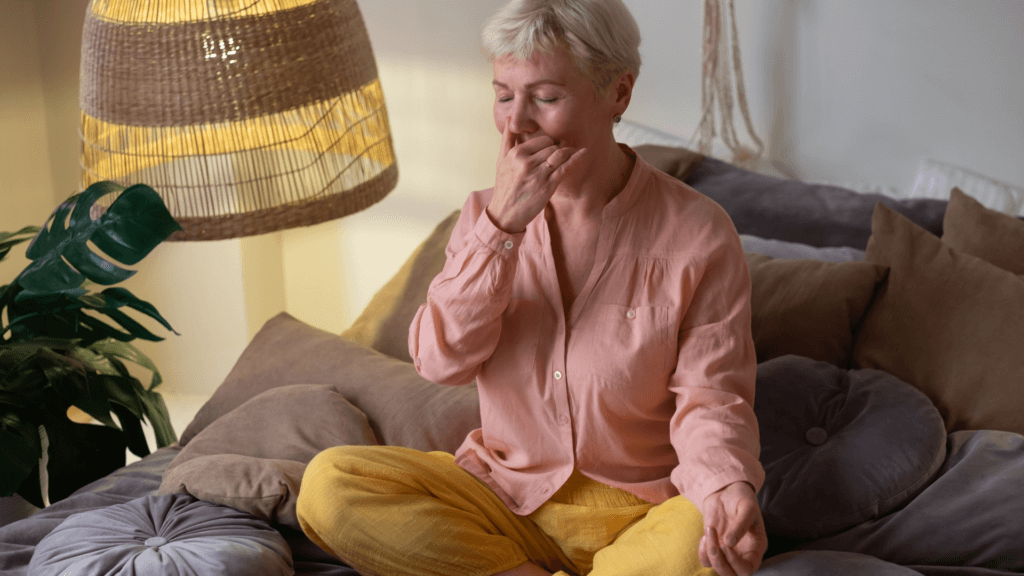
Sit tall. Place the left hand in Gyan Mudra. With the right hand, alternate nostrils: inhale left, exhale right; inhale right, exhale left. Keep the breath smooth and deep.
Left and right nostril dominance shifts every 90–150 minutes. The left side is cooling and receptive, while the right side is warming and projective. Therefore, alternating flow balances brain and mood in minutes. For example, inhale left–exhale right to relax before sleep, or inhale right–exhale left to sharpen focus.
Cooling and Specialty Breaths: Precise Tools
Sometimes you need a targeted shift. These small, elegant techniques can help:
- Sitali Pranayam : Curl the tongue, inhale through the curl, exhale through the nose. It cools and calms.
- Sitkari Pranayam : If the tongue will not curl, draw air over the teeth and exhale through the nose.
- Vatskar Pranayam: Take short “sipping” inhales, then exhale long. Builds focus and control.
- Whistle Breath: Inhale with a soft whistle, exhale through the nose. Stimulates circulation and higher glands.
- Segmented and Cannon Breaths: Appear in kriyas with specific effects. Practice them as taught.
The Science in Everyday Words
Slow breathing tells the body it is safe. Heart rate eases, blood pressure drops, and digestion improves. These are some of the benefits of pranayam. In addition, rhythmic breath strengthens respiratory muscles and improves gas exchange. Safe suspensions train you to meet pressure without panic. Over time, attention steadies, stress chemistry quiets, and mood brightens.
Safety and Good Sense
Go gradually. If you feel dizzy, stop and breathe naturally. People with medical conditions should consult a provider. During pregnancy or menstruation, avoid Breath of Fire and strong suspensions. When unsure, choose Long Deep Breathing.
FAQ´S
Not exactly. Deep breathing is one tool. Pranayam adds rhythm, ratios, and awareness.
Use the nose for most practices. Exceptions include Sitali and Sitkari.
Brisk and even—two to three cycles per second—without pauses.
Quiet and alert. The face is soft, the throat is easy, and there is no strain.
Begin with Long Deep Breathing. Then add Alternate Nostril. Next, explore Breath of Fire and suspensions.
Takeaway
Breath is ordinary yet sacred. With Pranayam, it becomes a steady teacher. It calms the system, clears the mind, and opens intuition. Start where you are. Breathe well. Then let this exact, simple practice carry you through the day.
Your experience is important!
Share your wisdom with others like you. Leave your comment below