Yogi Bhajan Teaches the “Long Ek Ong Kar” Meditation
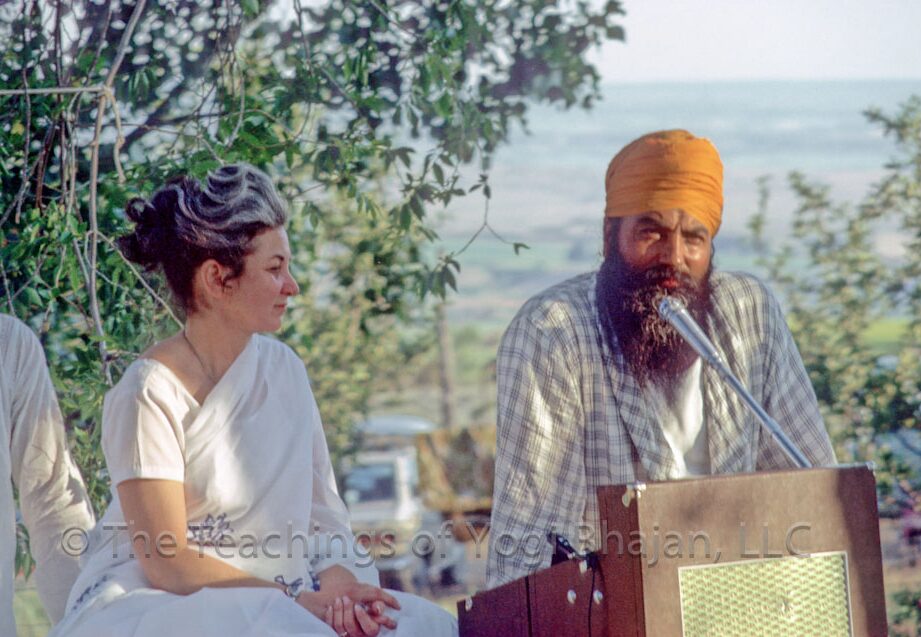
Written by Shakti Parwha Kaur, Yogi Bhajan’s first student in the United States:
I have a great personal attachment and affection for this mantra, because Yogi Bhajan taught it to me in December of 1968, when my 19-year-old son was in serious trouble. Yogiji told me, “There is nothing more powerful in the world than the prayer of a mother for her son, and if you will chant this mantra for one hour before sunrise every day for 40 days, he will be all right.” I asked, “What about all the other things I’m doing, my Sufi visualization, my Hopi mantra, and my Vedanta meditation?” He said, “Fine, do them, but try this also.”
Suffice to say, it worked! On the second day of chanting, the power was so obvious, I realized I didn’t want to do anything else. This was “it.” And it has been “it,” for over 40 years. Now, many people chant this mantra for seven minutes a day as part of the 3HO morning sadhana, but it’s still “my” mantra.
It is said that chanting Long Ek Ong Kar’s, also known as Morning Call, Long Chant, and the Adi Shakti Mantra, opens all the chakras, charges the solar centers, connects the soul to the Universal Soul, and liberates us from the cycle of karma.
How it Works and What it Does
This was almost the only mantra Yogi Bhajan taught during his first year in the United States (plus Sat Nam, of course). It is extremely powerful and energizing when done correctly. (Correctly means with full concentration, accurate rhythm, and proper pronunciation—and Neck Lock applied!) These eight syllables are the “code” letters, the direct personal phone number connecting you, the creature, with your Creator. It has been said that a person can attain liberation by chanting this ashtang (eight-part) mantra correctly for 40 days, for two and one-half hours before sunrise (the ambrosial hours).
The ambrosial hours are the ideal and most effective time of day to chant this mantra.