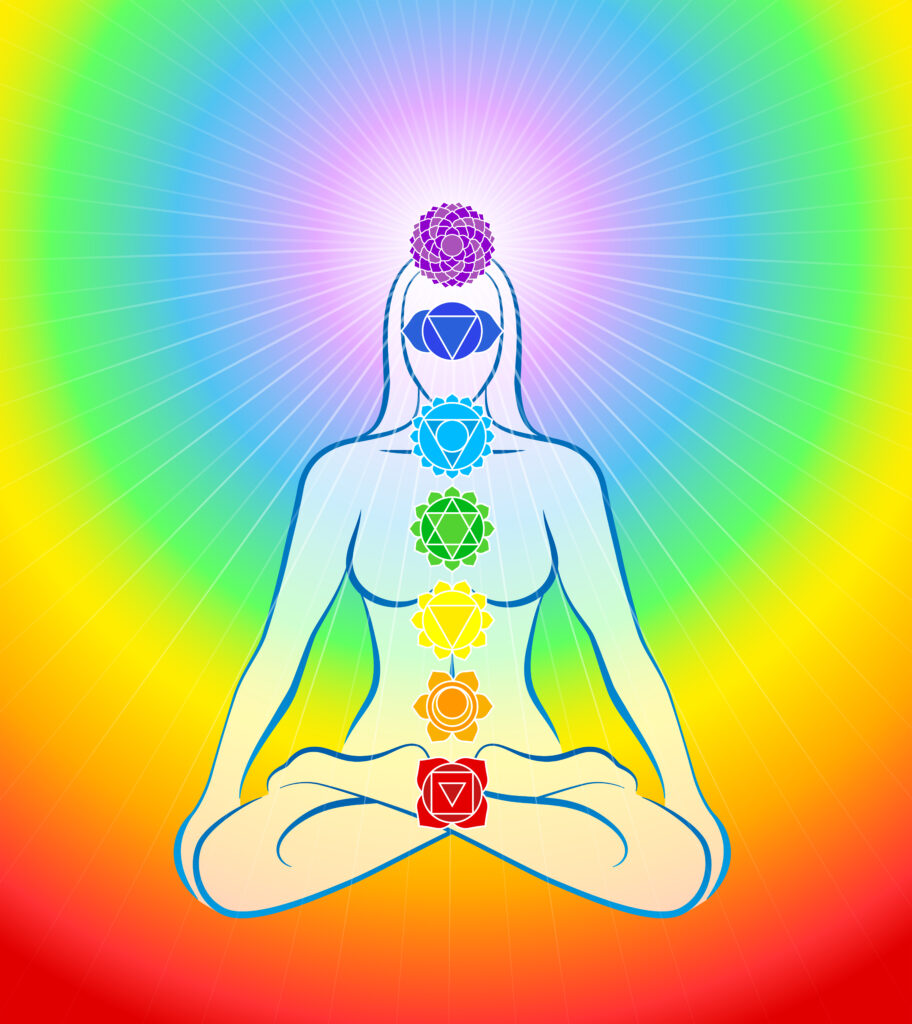
Understanding chakras in Kundalini Yoga offers a profound map of human energy, consciousness, and evolution. In this yogic tradition, the chakras are dynamic vortices of life force that influence how we perceive, feel, choose, and act. These centers shape our emotional landscape, our inner strength, and our spiritual awareness. This system includes eight major chakras—seven within the physical body and one in the aura—forming a holistic design through which energy flows, transforms, and expresses.
Balanced chakras create stability, vitality, intimacy, intuition, compassion, clarity, radiance, and elevation. When the chakras are blocked, the flow of prana becomes restricted, limiting perception, emotional regulation, and the ability to respond gracefully to life. Because the practice is energetic by nature, chakras in Kundalini Yoga are activated and balanced through kriya, breathwork, mantra, meditation, and conscious lifestyle choices.
Estimated reading time: 9 minutes
Table of contents
- The Chakra System in Kundalini Yoga
- Lower Triangle: The Foundation of the Chakras in Kundalini Yoga
- The Heart: The Balance Point of the Chakras in Kundalini Yoga
- Upper Triangle: The Lifting Force of Chakras in Kundalini Yoga
- How Prana and Kundalini Interact with the Chakras in Kundalini Yoga
- Chakras in Kundalini Yoga and Emotional Patterns
- Practices to Balance the Chakras in Kundalini Yoga
- Conclusion: The Integrative Power of Chakras in Kundalini Yoga
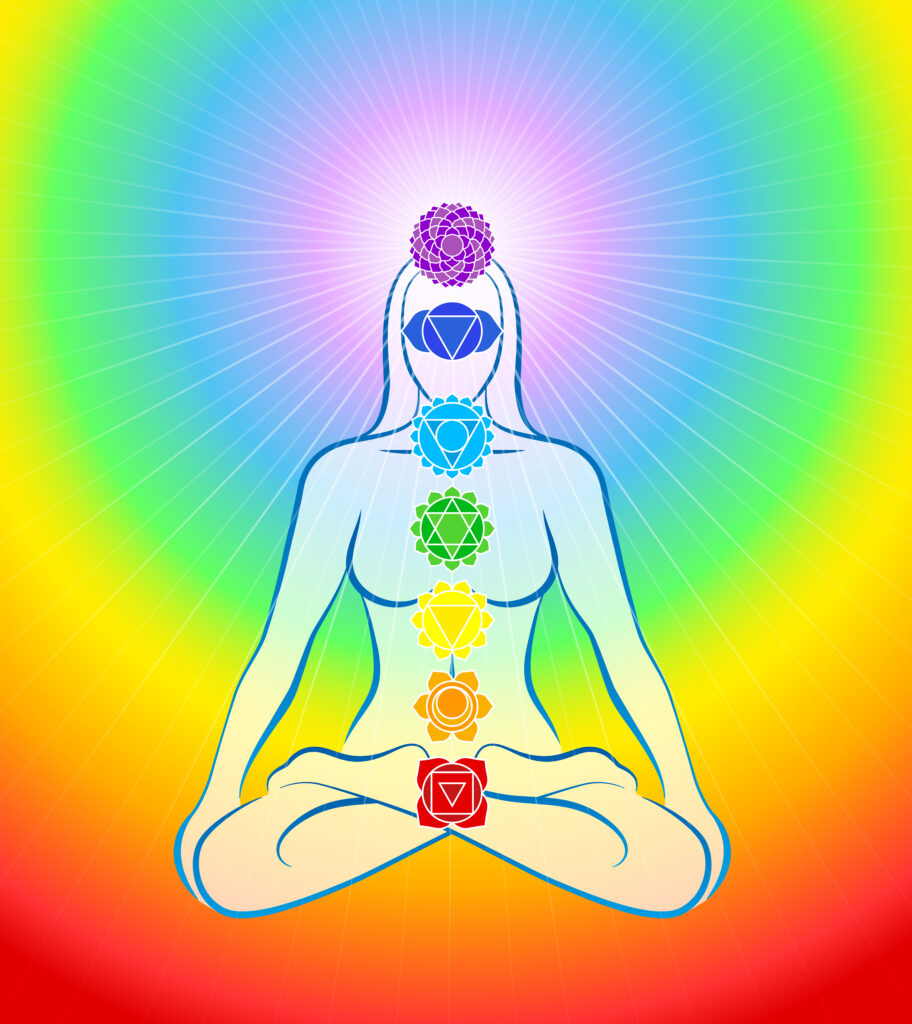
The Chakra System in Kundalini Yoga
The framework of chakras in Kundalini Yoga describes an upward journey of transformation. Energy flows through eight centers: the Lower Triangle, the Heart Center, the Upper Triangle, and the Aura.
- The Lower Triangle (1st–3rd chakras) focuses on elimination, stability, sexuality, and personal power.
- The Heart Chakra (4th) bridges the lower and higher realms, where identity shifts from “me” to “we.”
- The Upper Triangle (5th–7th chakras) refines perception, intuition, and spiritual awareness.
- The Eighth Chakra, the aura, reflects and integrates the total projection of all the others.
This system functions as a unified field; no chakra stands alone. Each is interdependent and contributes to the full expression of consciousness.
Lower Triangle: The Foundation of the Chakras in Kundalini Yoga
First Chakra — Muladhara (Root Chakra)
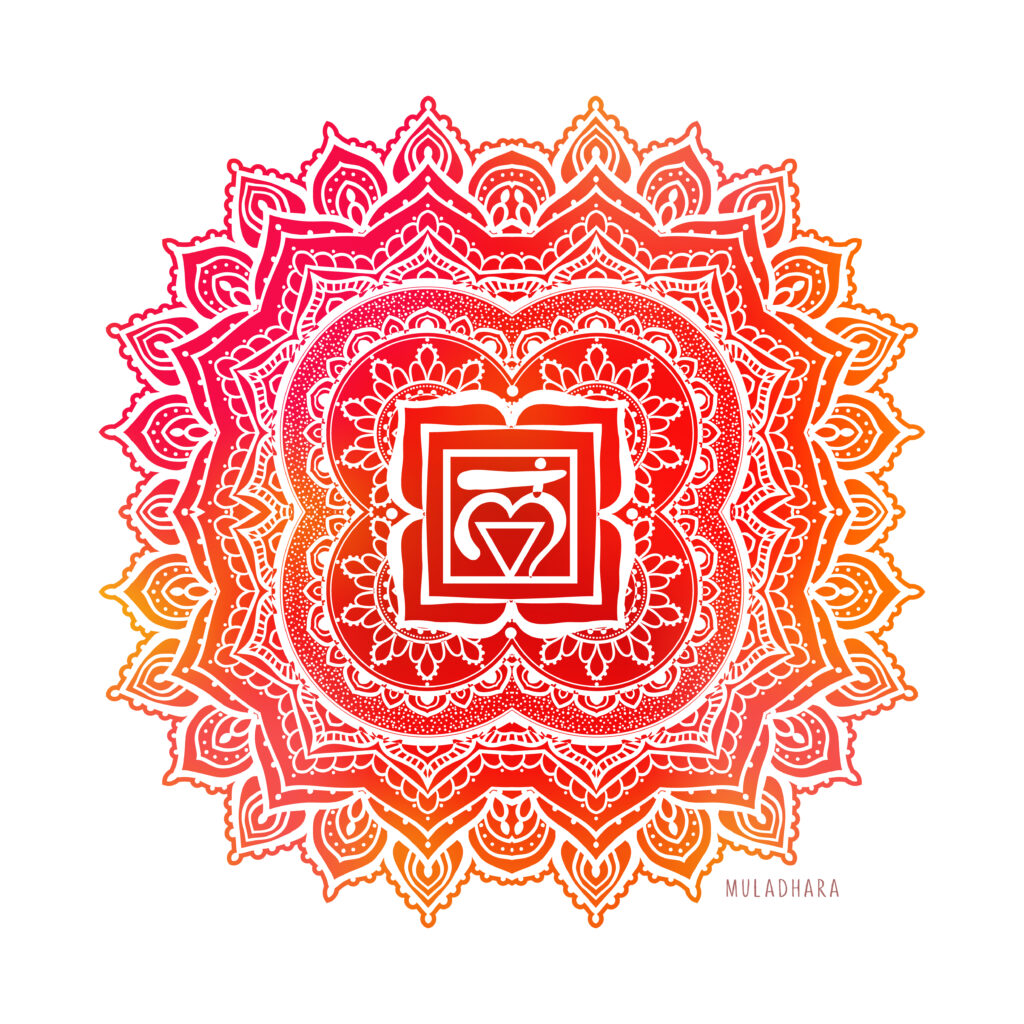
Location: Base of spine, between anus and sexual organs
Element: Earth
Color: Red
Organs/Glands: Organs of elimination
The First Chakra governs foundations, habits, survival instincts, security, and the unconscious patterns that keep life functioning at its most basic level. It is the realm of automatic behavior and deeply instinctual responses essential for survival. It represents the mental and emotional state most veiled from spirit—where separateness, fear, and the sense of “I am alone” arise most strongly.
Muladhara reduces experience down to the essentials, just as the organs of elimination reduce food to its universal components. When balanced, this chakra brings grounding, loyalty, stability, physical vitality, and healthy elimination. When imbalanced, one experiences fear, insecurity, weak constitution, not belonging, sexual disturbances, and problems in the lower digestive tract.
Useful yoga exercises: Crow Pose, Frog Pose, Mulbandh, body drops, chair pose, and stretches on the stomach.
Second Chakra — Svadhisthana (Sacral Chakra)
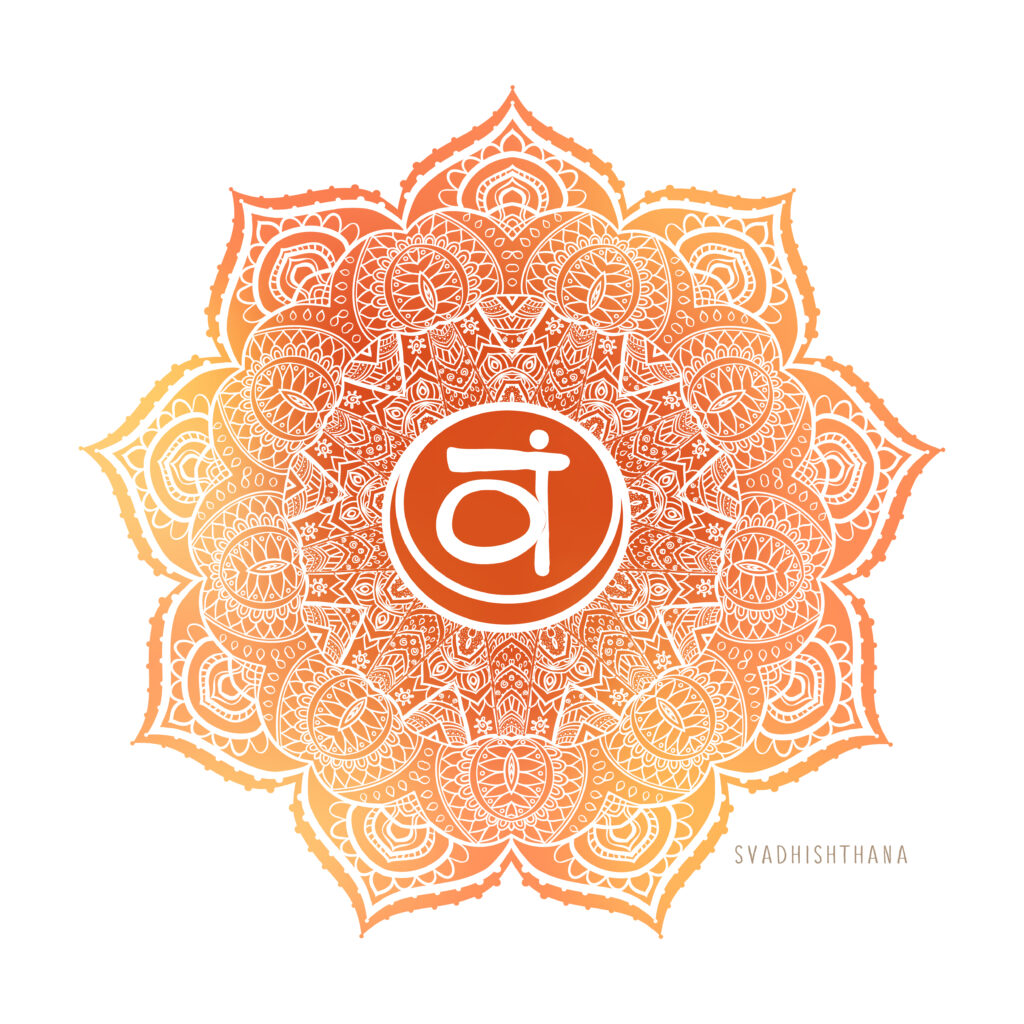
Location: Sexual organs
Element: Water
Color: Orange
Organs/Glands: Reproductive organs, kidneys, bladder
Svadhisthana governs the capacity to feel, to desire, and to create. It directs emotional flow, sensuality, sexuality, creativity, and the ability to form responsible, healthy relationships. When this chakra is balanced, one has patience, emotional fluidity, and a positive, relaxed relationship with sexuality and intimacy.
When imbalanced, emotions become rigid or chaotic. This can lead to guilt, poor boundaries, fear of intimacy, irresponsible relationships, sexual dysfunctions, or kidney and reproductive issues. The Second Chakra also stores early emotional imprints that shape adult relationships and creative expression.
Useful yoga exercises: Sat Kriya, Frog Pose, Cobra Pose, Butterfly Pose, Cat-Cow, Maha Mudra, and pelvic lifts.
Third Chakra — Manipura (Navel Center)
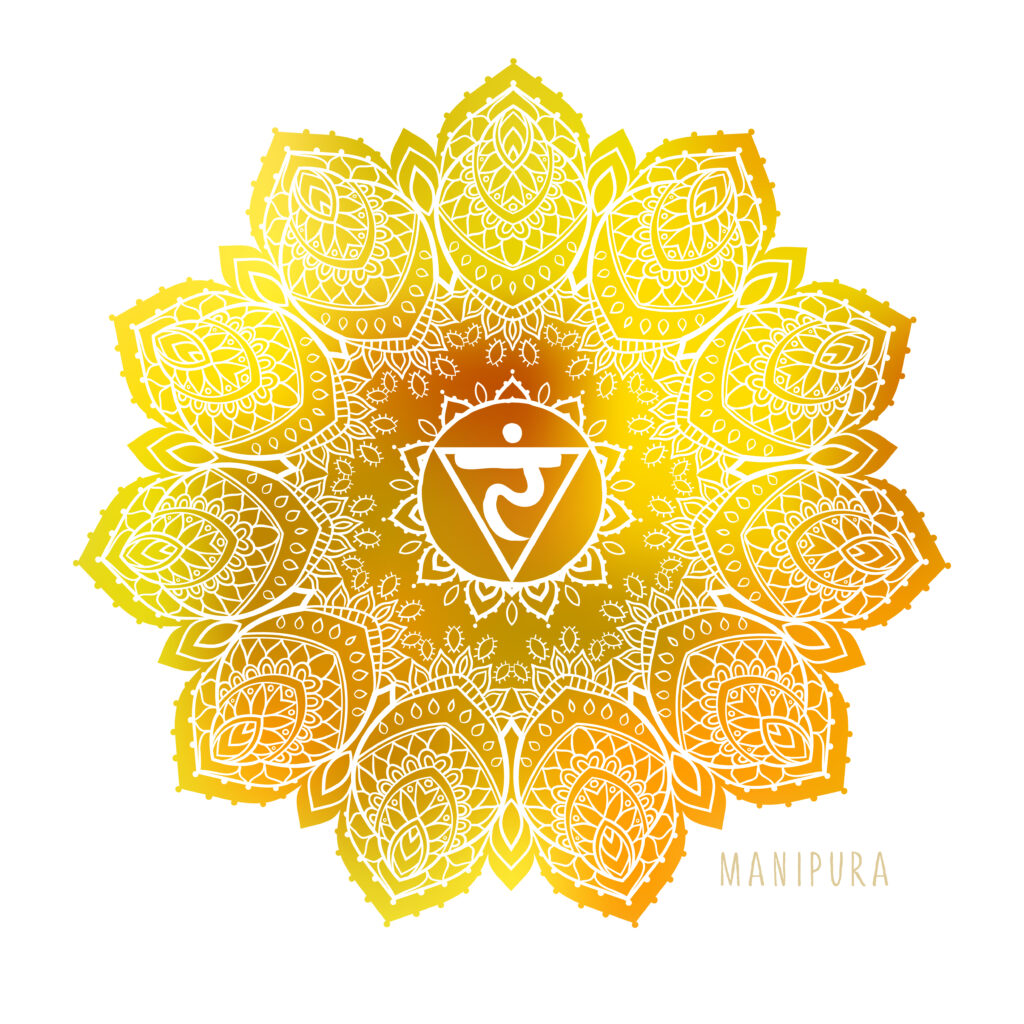
Location: Navel point and solar plexus
Element: Fire
Color: Yellow
Organs/Glands: Digestive organs, liver, gallbladder, pancreas, adrenals
The Third Chakra is the seat of willpower, action, and balance — the center of personal power and the domain of the “spiritual warrior.” It is fueled by the fire of transformation and coordinates identity, self-esteem, judgment, discipline, and the ability to complete tasks. A strong Third Chakra gives inner balance, vitality, inspiration, and the strength to project energy into action.
In yogic anatomy, the navel is the reserve pool of energy from which Kundalini awakens. Energy accumulated at the navel travels through channels to the base of the spine, stimulating the dormant Kundalini in the First Chakra and initiating its ascent through the chakras.
When imbalanced, Manipura produces anger, greed, shame, despair, digestive issues, lack of spontaneity, self-denial, and a tendency to conform for approval. A strong Third Chakra provides fearlessness and tactical intelligence, enabling one to act consciously and complete what must be done.
Useful yoga exercises: Stretch Pose, Breath of Fire, Bow Pose, Sat Kriya, Diaphragm Lock, Peacock Pose, and any kriya that strengthens the abdominal area.
The Heart: The Balance Point of the Chakras in Kundalini Yoga
Fourth Chakra — Anahata (Heart Chakra)
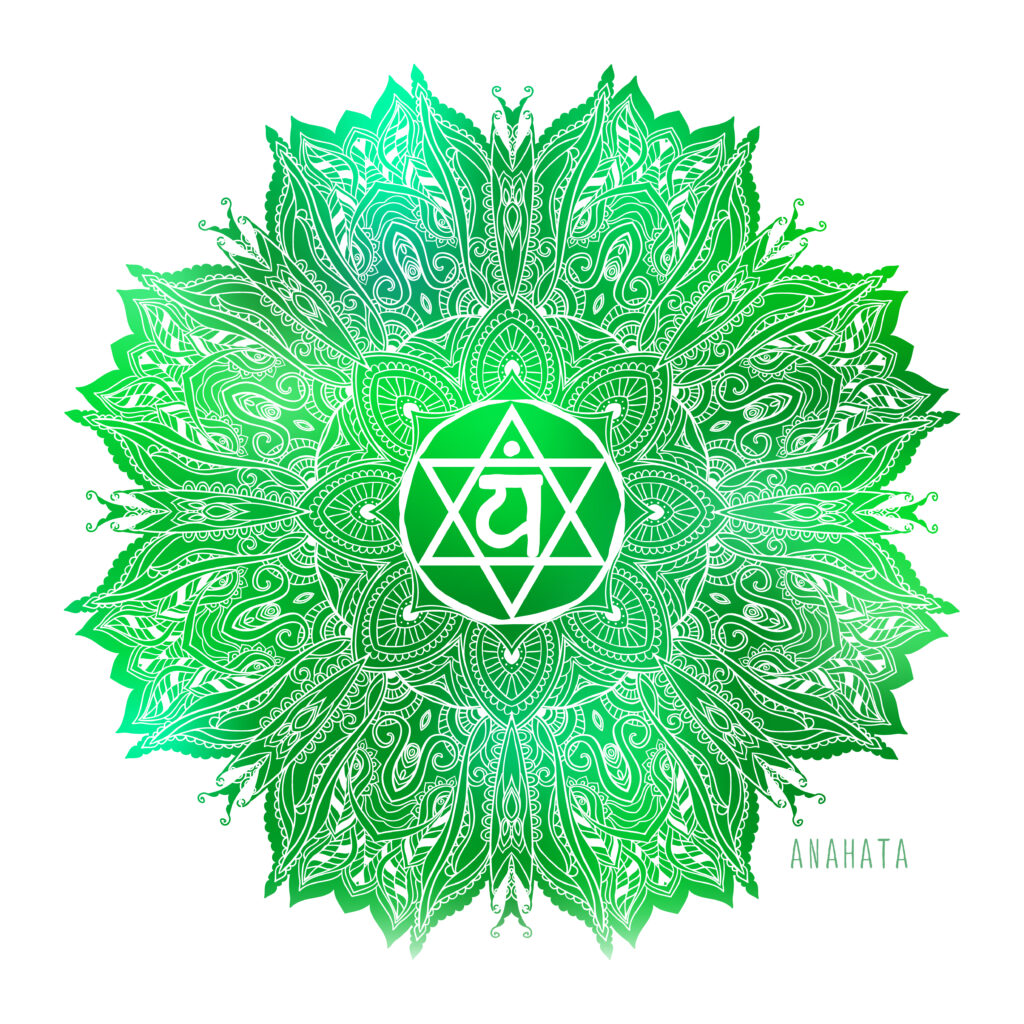
Location: Center of the chest
Element: Air
Color: Green
Organs/Glands: Heart, lungs, thymus
Anahata is the center of love, compassion, forgiveness, and awakening. It marks the shift from “me” to “we,” opening the capacity for empathy and the understanding of others as equal expressions of spirit. It is the meeting point between the lower chakras (which manage impulse) and the upper chakras (which expand consciousness).
A balanced Heart Chakra allows one to feel deeply while choosing how to direct feelings with maturity and devotion. It also governs healthy boundaries, relating closely to the immune system and thymus. When imbalanced, one may experience grief, emotional collapse, helper syndrome, heartbreak, heart or lung issues, and fear of rejection.
Useful yoga exercises: Ego Eradicator, Yoga Mudra, Bear Grip, Baby Pose, pranayama, upper-body twists, arm exercises.
Upper Triangle: The Lifting Force of Chakras in Kundalini Yoga
5. Fifth Chakra — Vishuddha (Throat Chakra)

Location: Throat
Element: Ether
Color: Light blue
Organs/Glands: Throat, thyroid, cervical vertebrae
Vishuddha governs truth, communication, integrity, and the projective power of the word. It is the center of teaching, authenticity, and creative expression. When balanced, the voice is strong, clear, and aligned with higher wisdom. One expresses truth with grace and has healthy, conscious interactions with others.
Imbalance brings insecurity, shyness, lethargy, fear of judgment, voice problems, and thyroid or neck issues. It is the chakra where sound becomes a tool of awakening, making mantra practice particularly transformative.
Useful yoga exercises: Chanting, Shoulder Stand, Plow Pose, Camel Pose, Cat-Cow, Neck Lock, Neck Rolls.
6. Sixth Chakra — Ajna (Third Eye Chakra)
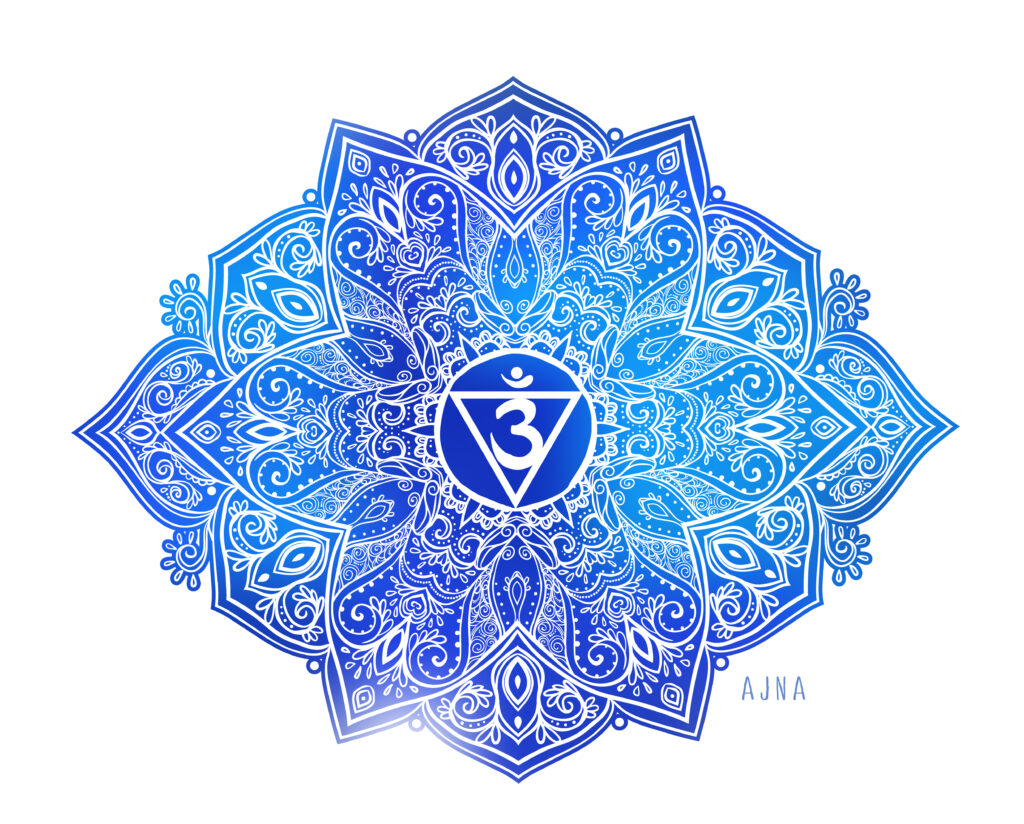
Location: Between the eyebrows
Color: Indigo
Organs/Glands: Pituitary gland, brain
Ajna is the center of intuition, projection, wisdom, visualization, and identity. It governs the ability to perceive beyond duality and to understand the deeper purpose of actions. When balanced, it sharpens concentration, determination, and clarity. It allows one to assess long-range consequences and to act from integrated awareness.
When imbalanced, confusion, depression, over-intellectualization, or rejection of spiritual experience can occur. The Third Eye opens through the vibration of mantra, meditation, and practices that stabilize the mind.
Useful yoga exercises: Kirtan Kriya, Long Chant, Archer Pose, Whistle Breaths, Yoga Mudra, meditations with the forehead to the floor.
7. Seventh Chakra — Sahasrara (Crown Chakra)
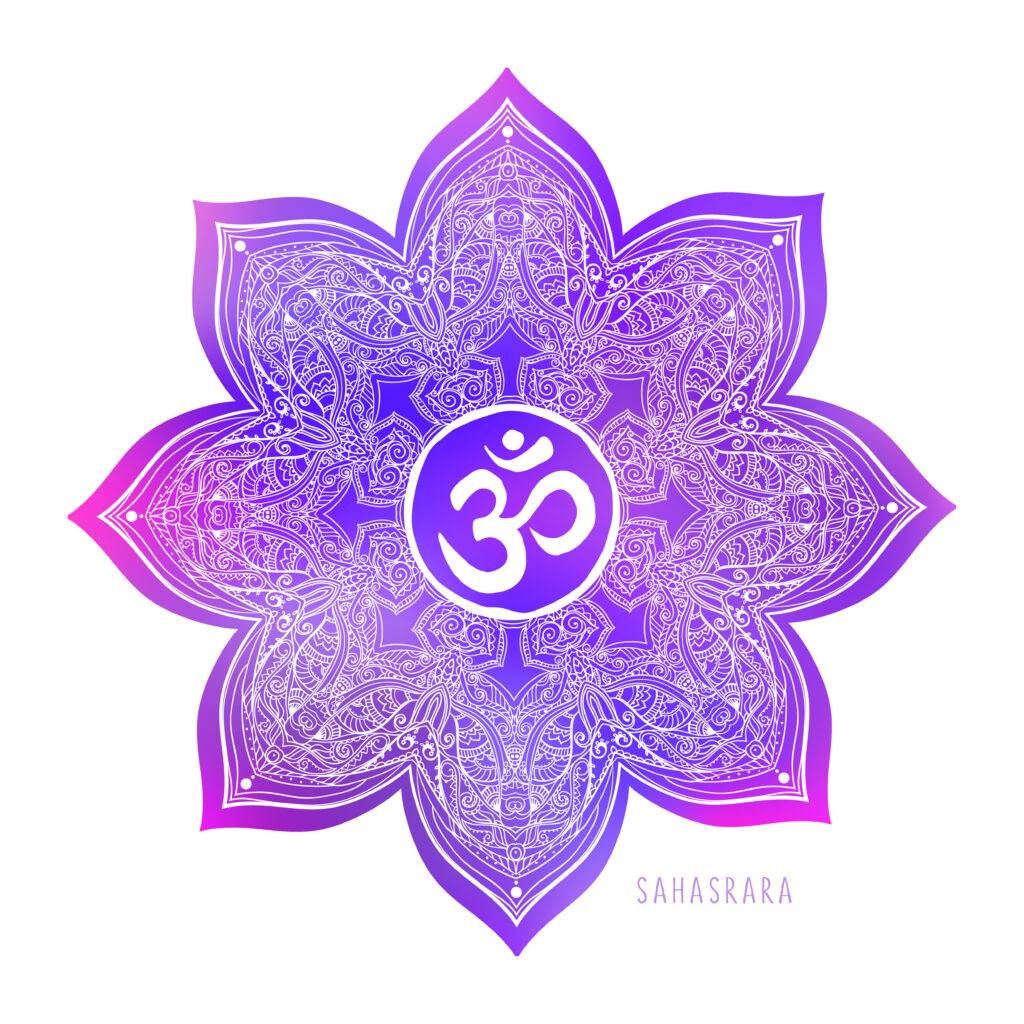
Location: Crown of the head
Color: Violet
Organs/Glands: Pineal gland, brain
Sahasrara is the seat of the soul — the center of transcendence, vastness, and the flow of divine guidance. It represents connection to the Infinite and the experience of unity. When active, it brings elevation, humility, and deep inner peace.
Its shadow expresses as grief, fear of death, or the sense of separation from existence. This chakra opens naturally through deep meditation, devotion, and surrender of the ego into higher consciousness.
Useful yoga exercises: Ego Eradicator, Mahabandh, Sat Kriya, meditation, concentration at the tip of the nose.
8. Eighth Chakra — The Aura (Radiance)
Location: Electromagnetic field surrounding the body
Color: White
The Eighth Chakra is the radiant magnetic field that surrounds the physical and subtle bodies. It reflects the total projection of all other chakras and communicates one’s presence, integrity, and authenticity. A strong aura provides protection, filters negativity, and naturally uplifts others.
When weak, the individual feels vulnerable, withdrawn, and easily affected by the environment. A strong aura creates a sense of vastness and domain, filling a room with presence alone and allowing the subtle forces of the universe to support one’s intentions.
Useful yoga exercises: Archer Pose, Ego Eradicator, Triangle Pose, arm exercises, meditation.
How Prana and Kundalini Interact with the Chakras in Kundalini Yoga
Prana powers each chakra. When energy flows freely, the centers remain balanced. Kundalini rises from the navel through the chakras, awakening their qualities and integrating them into lived behavior. This awakening happens gradually and safely through the discipline of kriya, breath, mantra, and meditation.
Chakras in Kundalini Yoga and Emotional Patterns
Each chakra shapes thoughts, emotional tendencies, and the choices one makes. When a chakra opens, perception expands. When blocked, psychological patterns tighten. As prana clears old patterns, the subconscious becomes more integrated with conscious awareness, supporting wholeness and intuitive living.
Practices to Balance the Chakras in Kundalini Yoga
Every chakra has corresponding kriyas, breaths, and meditations:
- First Chakra: grounding poses, Mulbandh
- Second Chakra: Sat Kriya, hip-opening poses
- Third Chakra: core kriyas, Breath of Fire
- Fourth Chakra: backbends, pranayama
- Fifth Chakra: chanting, Neck Lock
- Sixth Chakra: Kirtan Kriya, meditation
- Seventh Chakra: deep meditation, Mahabandh
- Eighth Chakra: arm exercises, Archer Pose
These practices do not overstimulate; they harmonize each center within the larger energetic system.
Conclusion: The Integrative Power of Chakras in Kundalini Yoga
The system of chakras in Kundalini Yoga offers a pathway for human evolution, emotional balance, intuitive awareness, and spiritual awakening. By working consciously with the eight centers, practitioners align body, mind, and soul. This alignment strengthens our capacity to face life’s challenges with grace, clarity, and stability, allowing the fullness of human potential to unfold.
[email protected]
I couldnt find what I need. I prefer the old version of website
Gurumeher Kaur Khalsa
Sat Nam, sorry to hear that you did not find what you were looking for. If you can tell me what it was I can maybe be of service.
Angelos
Is it better to practise one chakra for a period or to move cyclical one day/one chakra
Gurumeher Kaur Khalsa
Sat Nam Angelos, thank you for reading! It is up to you if there is one chakra you would really like to focus on, or if you would like to go through all of the centers one by one. The choice is yours!